


For a gestational carrier, pregnancy and delivery are different from carrying her own children. So how do a gestational carrier and the intended parents build a good relationship along the way? It starts, and largely stays, with communication.
Good communication is the foundation of a healthy relationship. At the Surrogacy Center of Philadelphia, we make sure gestational carriers and the families they match with share similar preferences on important things like how often to be in touch. We encourage intended parents and surrogates to talk directly, and we stay available at any time for either side to ask a question or raise a concern.
The gestational carrier is carrying the intended parents’ child, but it is her body. So how do you raise concerns, and is anything off limits? Being an intended parent means giving up a measure of control, which is not easy. We do our best to match parents with a carrier whose lifestyle and values are close to their own, and we find that goes a long way toward preventing conflict.
There are stretches, especially the week before the embryo transfer and the weeks after, until the heartbeat is confirmed, when everyone feels some stress about whether the carrier is following her protocol and resting well. It helps when intended parents attend the key appointments and see her progress firsthand. When that is not possible, we document those visits with photos, videos, and summaries.
If an intended parent has a real concern, tell your agency. It is our job to help, not to make a match and leave both parties to work it out alone. We speak with the gestational carrier in a caring but professional way, because we want the same thing she does: the best possible outcome.
Bonding is a process, and there are many ways for parents to stay connected to their baby before birth. Keeping up with each developmental change and attending important appointments both help, so never hesitate to ask for ultrasound pictures. Some parents keep a journal of their feelings about the baby’s growth and the parenthood ahead. Many expectant parents talk to their baby in utero, and parents through surrogacy can do the same. Write those thoughts down and read them to your baby later. It makes a precious keepsake.
Many surrogates are glad to document the moments intended parents cannot be there for. Through photos, videos, and video calls, staying connected is easier than ever.
Prizzilla, one of our surrogates, shared her own experience:
“As a gestational carrier, your pregnancy and delivery is going to be different from your experience with your own children. What worries you had preparing to bring your child into the world are now left up to your intended parents, even though they’re not the ones carrying and delivering their baby. In order to help with some of the stress that comes with preparing for a baby’s arrival, my advice is to include your Intended Parents in your pregnancy as much as possible.
My intended parents lived internationally, so I only got to see them a few times before the arrival of their precious bun. I did however, make it a point to document everything they couldn’t physically be a part of. From the moment I matched with them, I started to film myself sharing my feelings about becoming a surrogate and hopefully carrying and delivering their baby one day. I filmed myself taking my medications and injections leading up to the embryo transfer, and of course, the transfer itself. Every doctor’s appointment, I filmed the heartbeat and ultrasound, then sent the videos to my IPs so they could experience that same joy expectant parents usually have at those appointments.
Most of what I filmed as far as my thoughts, IVF journey, and ‘bumpdates’ were saved for one big video diary I gave to my intended parents after they had returned home with their bundle of joy. This was one way I felt I could include my Intended Parents in the everyday moments an expectant parent lives through.
Another way I was able to involve my Intended Parents in my pregnancy was by spending time with them while they were in town. Of course, they were fortunate enough to sit in a few doctor’s appointments with me, but during their free time, we enjoyed each other’s company. I’ll never forget their very first visit was for an early morning appointment that ended around the time malls were opening up. I cleared my schedule and spent the entire day shopping with them as someone would do with a pregnant friend or family member. We compared baby bottles, strollers, looked at tons of tiny clothes, and by the end of it all, I forgot I was the pregnant one!
My excitement for my intended parents grew with every minute I got to spend planning for their baby with them, and I could tell it contributed to theirs as well. Sure, holding their baby in their arms is as real as it gets, but growing a child isn’t something that everyone personally experiences. Remember this when building a relationship with your Intended Parents, and consider different ways of including them in your pregnancy.”
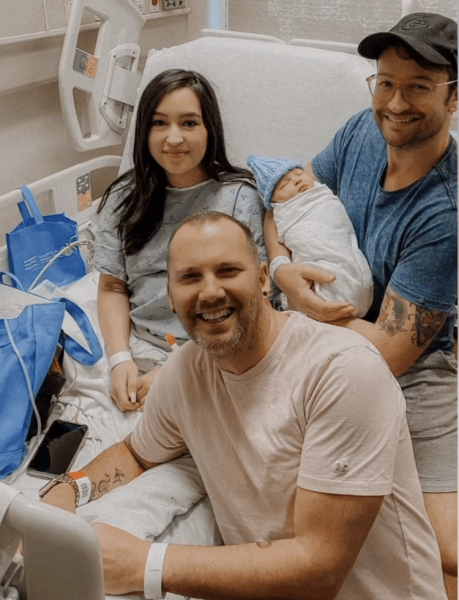
Gestational carriers and the families they help can build strong, healthy, lifelong relationships through our program. It is a remarkable journey they take together, and open, honest communication, supported by the right agency, is what holds it together.
If you are thinking about surrogacy, as a parent or as a surrogate, we would be glad to talk it through. Learn more about our services for intended parents, about becoming a surrogate, or reach out with any questions.